300 Hour Ashtanga & Vinyasa Yoga Teacher Training in Pattaya, Thailand
Designed as the next step after a 200-hour training, this advanced residential program develops Ashtanga Primary Series practice, hands-on adjustment skills, Vinyasa sequencing, functional movement, anatomy and teaching confidence.
Move beyond foundation-level training into advanced practice and teaching.
The live course is positioned for students who have already completed a 200-hour teacher training and want to continue toward a 500-hour level of study.
The month-long residential curriculum deepens Ashtanga Vinyasa practice while adding advanced alignment, adjustments, sequencing, anatomy, philosophy and teaching methodology.
You work with the Primary Series in led and self-practice formats, explore contemporary Vinyasa and functional movement, and learn how to adapt classes for different abilities while refining your own personal practice.
See what is included →Everything you need for a focused advanced residential immersion.
Training, accommodation, meals, course materials and day-to-day community facilities are brought together so your attention can stay on practice and study.
Complete 300-hour advanced residential teacher training
Daily meditation, chanting or pranayama practice
Course manual and learning materials
Applicable Yoga Alliance pathway after successful completion
Opening and closing ceremonies
28 nights accommodation at Kranti Yoga
Vegetarian or vegan meals and refreshments as scheduled by the school
Snacks, fruit, tea and filtered water throughout the day
Yoga classes, lectures, teaching practice and technical workshops
Use of shalas, sun lounges, chill-out areas, Wi-Fi and shared facilities
Refine the Primary Series, advanced sequencing and the skills behind safer teaching.
Ashtanga Primary Series
Deepen led and self-practice while refining alignment, pacing and modifications.
Ashtanga Yoga and Adjustments
Learn how to observe, support and adjust Primary Series postures with clearer intention and sensitivity.
Vinyasa Sequencing
Study an advanced framework for building contemporary Vinyasa classes around breath and progressive movement.
Functional Movement
Explore movement beyond single-plane yoga shapes to improve strength, mobility and range of motion.
Teaching Methodology
Develop cueing, class structure, peer teaching and the ability to adapt practice for different students.
Advanced Anatomy & Philosophy
Connect shoulder, hip, spine and knee anatomy with Patanjali, subtle-body studies and contemporary reflection.

Deepen the Primary Series through guided and self-practice.
Ashtanga classes take place on alternate mornings, with the lead teacher guiding the full Primary Series and offering modifications where the sequence becomes more demanding.
As self-practice develops, you work at a more personal rhythm while teachers observe alignment and help you investigate specific postures in greater depth.

Study how to support another body without losing respect for individual difference.
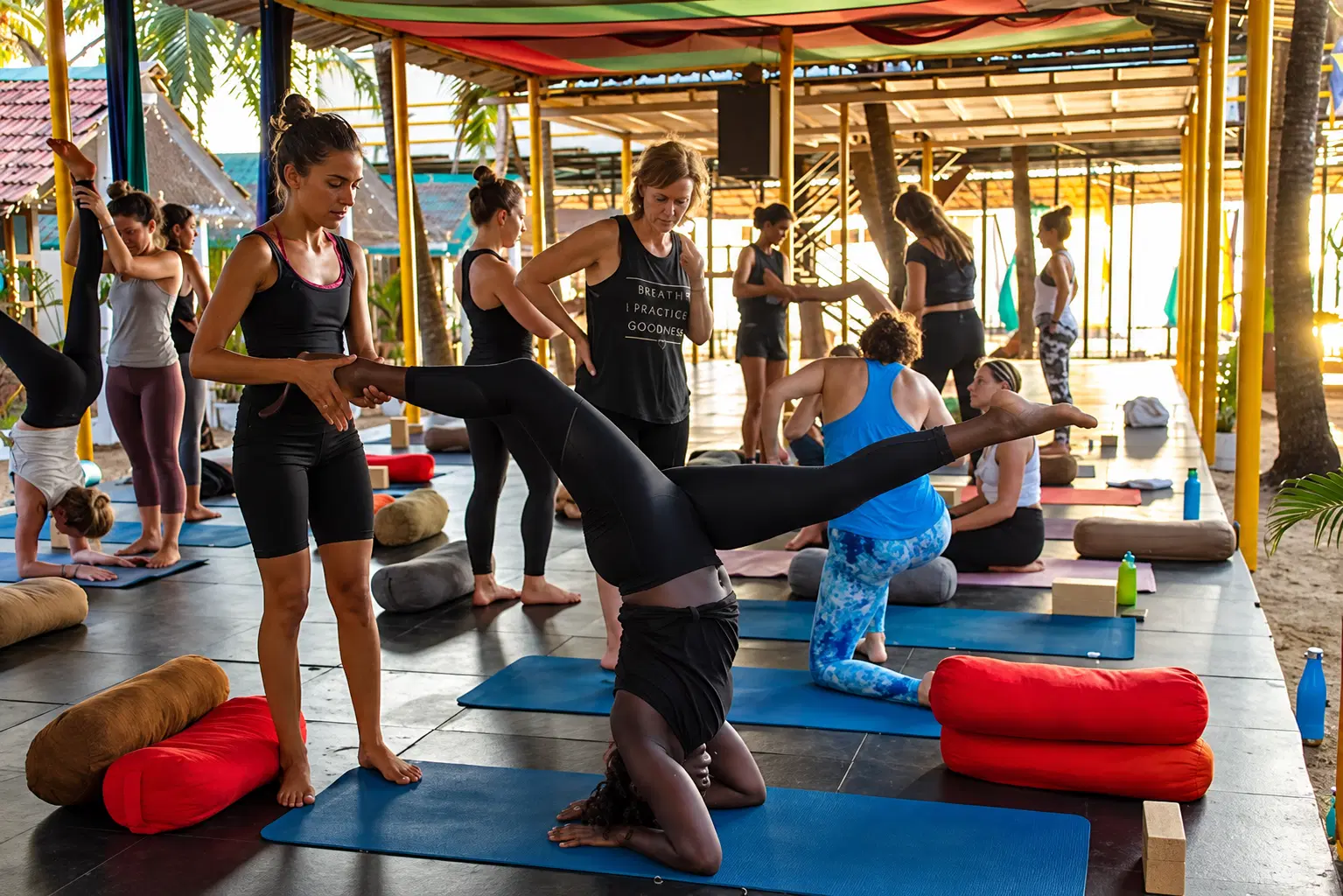
Adjustment workshops use the Primary Series as a structured laboratory for observation, alignment and hands-on support.
Students practise with peers, then apply selected adjustments in supervised morning sessions, including adaptations for common Vinyasa postures.

Build advanced sequences with rhythm, function and intention.
Vinyasa sessions use progressive sequencing to move toward more challenging postures while maintaining breath-led continuity.
Dynamic stretching, myofascial release and functional movement are used alongside traditional alignment to create classes that feel contemporary without becoming disconnected from yoga practice.

Refine how you teach the Primary Series and contemporary flow.
The methodology module prioritises teaching the Ashtanga Primary Series with traditional alignment principles, breath synchronisation and intelligent modifications.
Peer teaching and practical Vinyasa work then expand those skills into dynamic class design, clearer cueing and more adaptable teaching.

Use focused workshops to make difficult movements teachable.
Ninety-minute workshops explore the physical and technical demands of advanced Vinyasa and Ashtanga practice.
Shoulder stability, inversions, arm balances, myofascial release, backbending, transitions and progressive movement all become material for deeper practice and better teaching.

Move beyond a single plane and expand what yoga can train.
Functional Movement encourages spinal articulation, diagonal patterns, multi-plane movement and primal patterns that are not always emphasised in traditional Ashtanga.
This work supports strength, mobility, range of motion and injury prevention while helping teachers understand how contemporary movement can sit alongside traditional practice.

Apply advanced anatomy to safer, more individual teaching.
Anatomy revisits the skeletal-muscular system and then focuses more closely on the shoulder, hip, spine and knee.
You connect muscle function and joint mechanics with the practical decisions required to create challenging but sustainable practice for yourself and your students.
Develop steadiness that supports advanced physical practice.
Use a broader pranayama vocabulary with retention and energy awareness.
The advanced curriculum extends familiar breathwork with solar and lunar practices, cooling techniques, sound and inner or outer retention concepts.
Place advanced physical practice inside a deeper philosophical framework.
Study includes Prana, Koshas, Bhutas, Chakras, Nadis, Mudras, Bandhas, Samskaras, Patanjali’s Yoga Sutras, Samkhya and selected Upanishadic and Vedic ideas.
Discussion asks how ancient teachings can be understood responsibly in contemporary practice and teaching.
Let philosophy shape the way you practise and teach.
An advanced day built around Ashtanga, Vinyasa, adjustments and study.
The sample timetable follows the live 300-hour course structure, balancing morning practice with philosophy, adjustment work, anatomy, methodology, technical workshops and sunset integration.
Live inside the experience at Pattaya Beach.
Residential training keeps practice, study, meals, rest and community life in one beachfront environment. Accommodation options range from shared garden stays to more private rooms, subject to availability.
Explore accommodation →
Pair advanced movement study with breath, meditation and cleansing traditions.
The month-long curriculum uses advanced pranayama, meditation, Shatkarm study and simple nature-based routines to support the physical and pedagogical work.
Pranayama
Traditional breath-control practices for awareness, steadiness and energy regulation.
Meditation
Concentration and observation practices designed to support inner stillness and self-awareness.
Shatkarm
Introduction to traditional yogic cleansing concepts and their role in preparatory practice.
Naturopathy
Simple habits using sunlight, the sea, grounding and fresh food within the Pattaya, Thailand environment.
The live course page presents the 300-hour advanced program as Yoga Alliance-recognized training. For students arriving with a previous 200-hour qualification, successful completion forms the advanced component commonly associated with 500-hour training progression.
Pattaya Beach, Thailand.
Train beside the Gulf of Thailand in a quieter part of Pattaya, Thailand, with tropical greenery, direct beach access and a residential learning environment.
View LocationFour clear steps to join the training.
Choose your date
Review the available 300-hour advanced batches and select your preferred dates.
Select your stay
Choose the accommodation category and optional items that suit your plans.
Apply online
Complete the application and share details of your previous 200-hour training and practice background.
Confirm your place
Pay the required deposit or full amount to secure your booking.